But Naruto is Japanese...
Yes brother I know...He has taken various things from various places for e.g.
Chakra
The main force or power behind ninjutsu is that of Chakra; which is a slightly different from the original Hindu concept of spinning vortices that act as energy focal points within the body, although the meaning can vary depending on the interpretation. The word Chakra in fact mean ‘wheel’ and there are a number of these thought to be located at specific points around the body – most commonly 7 major ones, located along the bodies centreline at the crown, brow, throat, heart, solar plexus, sacral (upper pelvis) and base/prostate (lower pelvis). These points could very well also be the influence for the “8 gates” techniques used by Rock Lee and Might Guy, and there are said to be many more minor chakras, which are scattered across the entire body which manifest is Naruto as the many chakra points that are the target for Hyuuga ‘gentle fist’ techniques.
While the meaning is slightly different, there are many references to swirling or vortex like qualities of chakra within Naruto, both in the formation of a jutsu such as the rasengan and the “mixing” of physical and spiritual energy.
The 5 ‘Elements’
Within Naruto, Chakra is said to have 5 natures, which are derived from the Hindu/Buddhism concept of the 5 elements, or basic materials or forces that make up the universe; Earth, Fire, Air, Water, Lighting.
Lighting is more often translated as ‘Sky’ or ‘Void’, and given the kanji空, but Lighting is an accepted alternative, while Earth is represented as the Kanji 地 (chi) rather than the土(do) used within Naruto, but the parallels are immediately obvious.
Together they are known as the ‘Godai’ or great five, and are often depicted as gorinto, which are 5-piece towers found at Buddhist temples and cemeteries, where each piece represents an element from Earth at the bottom to Lightning/Void at the top.
In the Naruto universe these are the 5 major forms of ability, along with yin and yang, that ninja may use in order to perform ninjutsu; but for a far better explanation of what they all do and how they can be combined, I very highly recommend this article in Narutopedia, which is awesome.
Yin and Yang chakras are inspired by a Taoist concept of balance and complimentary opposites often symbolised by the Taijitu. With its entry into China, Buddhism has clearly been influenced by Taoism and has incorporated many of its ideas, including the Zodiac and yin-yang (much like Pagan and Christian traditions in Europe). This fusion of ‘pure’ Buddhist and Chinese philosophies such as Taoism and Confucianism then migrated in Japan, where the lines between them have become much more blurred.
Hand seals or ‘Mudras’:
The ability to control Chakra is governed with the use of hand seals which again is routed in Buddhist tradition; the use of proscribed hand position ‘mudras’ is both a Hindu and Buddhist practice, and has both symbolic and practical purpose; they are used to aid one in meditation, and in some case actually hold ones muscles and chest in a position to regulate breathing and focus concentration. They also are used in Hindu and Buddhist art for images of deities where the symbolic nature of the seal is important, either in a position that represents an important action from scripture/legend or as a sort of supernatural power, such as the “wish granting” mudra.
They are so significant that, for example in Thai (Theravada) Buddhism, a Buddha image can only be shown with his hands in one of these positions. While the seals of Naruto do not directly correspond to mudras, they will feel very familiar to someone who watches the series.
Many martial arts also incorporated mudras into their stances, and clearly this has been incorporated into Naruto as a method to focus chakra and perform Jutsus, which is fits very well with both the symbolic, supernatural and physical uses of mudras.
The Naruto Hand seals are themselves are based on the Chinese Zodiac, is not a purely Buddhist tradition, but one that has been made up from a number of Chinese folk legends and philosophies such as Feng Shui and Taoism, however, there is variant of the story that tells of 12 animals coming to say farewell to the Buddha as he was about to leave the Earth to enter Nirvana. Each of the Chinese zodiac animals has also been associated with one of the Buddhist 12 Heavenly Generals, or the 8 Protector deities, and as described above the two traditions have become fused in the Japanese mythology of Kanshi.
Dojutsu – the Third Eye?
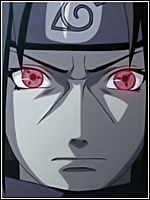
The Third Eye is a concept common both in western and eastern cultures, but in Hindu- and Buddhism is said to be a symbol of enlightenment and an ability attributed to the brow chakra in imagination, visualisation, extra sensory perception and self mastery. While the link to Naruto is less obvious, it is possible that this is the inspiration for dojutsu or eye techniques such as the sharingan, byakugan and rinnegan.
Jutsu names and abilities
Many Jutsu names are pretty self explanatory, mainly being descriptions of the jutsu itself such as Gokakyu - “Giant Fireball”. However a few have a symbolic meaning behind them too.
Kirin
Sasuke’s devastating lightening technique is named after an Asian mythical beast, sometimes compared to the Unicorn, which is a chimera made up of a dragon’s body, the horns and legs of a deer and the tail of a lion. In Japan, it is ranked as the highest of all mythical beasts, followed by the dragon and phoenix, (incidentally also the names of Sasuke’s techniques) and is considered to be a benevolent, peaceful creature that brings the pure and just good luck, supposedly not even disturbing the grass it walks upon. However, it can become angry, spitting fire and using a host of other fearsome powers when it encounters evil-doers, bringing righteous retribution upon them.
Clearly, its vengeful nature is being alluded to in the symbolic nature that it used against Itachi and perhaps the fact that it does not successfully destroy him is an early indication that Itachi’s wrongdoing was not as heinous as first appeared.
 it makes sense a bit too