In Buddhism, all creatures are trapped within the Six Realms of Desire; the God's Realm, the Demigod's Realm, the Human Realm, the Animal Realm, the Ghost Realm, and the Hell Realm. All creatures are trapped within these six realms in an endless cycle of rebirth, as they move 'up' and 'down' the ladder in accordance with their karmic merit. A human who does many evil deeds, for example, might be reborn as an animal in the next life to atone for his karmic misdeeds, while one who accumulated many good deeds over many lives might become a God ("Deva"). But although the God's and Demigod's (translated from Deva and Asura) are powerful and long-lasting, they too have finite and will eventually die and be reborn, whether into the same realm or into a lower one. And God's and Demigod's tend to grow complacent and waste their previous accumulated karma, which means that their next life will almost always be worse than their current ones.
The human realm, while not the 'best' realm, is actually considered to be the most karmic-advantageous, as in the human realm, people have the most potential to gain karmic merit and to be awakened to nirvana; the God's live in bliss, the Demigod's are consumed by war, the Ghosts are wracked by hunger, the animals are too foolish to gain wisdom, and as the denizens of the Hell realm are expiating their sins. Only humans are smart enough to gain wisdom, but not filled with such bliss that they have no need to struggle or improve themselves.
It is important to note that when creatures die, ALL of them go through the Hell Realm (the 'lowest' realm), where their life and sins are judged. There they will remain until their karmic debt is paid and they are reborn to a higher realm. They can consequently stay there for eons, or for less than a blink of an eye. As a general rule though, only the REALLY bad ones are 'residents' of the Hell realm instead of just 'tourists'.
All creatures are consequently trapped within this cycle of endless rebirth (and consequently endless suffering), with no escape. The goal of Buddhism and the Tathagatha Buddha, however, is to free people from this cycle by allowing them to see the reality of existence, freeing them from the "red dust" illusion that blinds people to their endless cycle, and allowing them to achieve the state of true immortality and true nirvana.
But there are others who also aware of this cycle, but who cannot or do not accept Buddhist wisdom, and who try to defeat the cycle by using heretical (and often evil) powers that can theoretically keep them alive, so that they can continue to have power within the Six Paths. Think immortal vampires sucking the blood of others, Voldemort splitting his soul into many pieces, evil wizards sacrificing virgins for power, or, in the manga, Orochimaru stealing the bodies of others and turning himself into a snake-hybrid. These people have, in a sense, "overcome" life and death, but they have not really escaped the cycle of suffering and rebirth, nor have they seen the truth of reality and awakened to wisdom.
Thus, those people are often referred to as treading the "Outer Path" to immortality (with the 'Outer' having heretical connotations), as opposed to orthodox Buddhism, which treads the "Inner Path" to enlightenment. It can be said, then, that while a being of the Outer Path can become all-powerful and freely TRAVERSE the Six Realms (for a time), only a being who follows the Inner Path can TRANSCEND it and achieve nirvana. Nothing which remains within the Six Realms can escape it forever; not even the mightiest 'immortals' of the Outer Path.
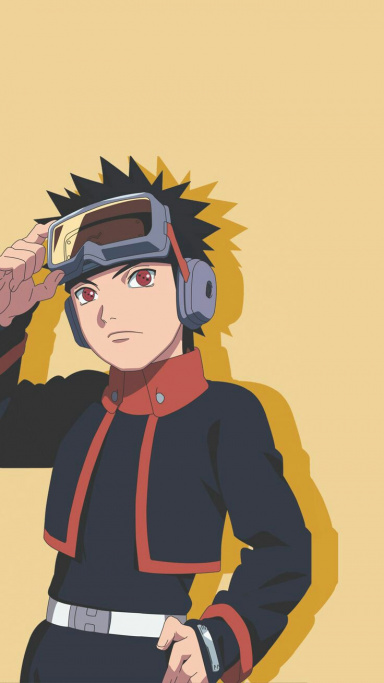
In this (shounen) manga, nirvana has been simplified as 'peace', and the cycle of suffering has been simplified as 'hate'. Of the Rikudo's, Nagato is a prime example of someone who was unable to accept the 'Inner Path' of peace, and instead turned to the 'Outer Path' to achieve his goals of escape suffering and hate, bringing the dead back through his power over the Hell Realm, and even summoning evil creatures such as the Heretical Demon Statue (which once was the ultimate all-powerful creature of the Outer Path, the Jyuubi), with the goal of terrifying the world into peace. Tobi/Madara, as well, are creatures of the Outer Path, wanting to use the Jyuubi and the Infinite Tsukyumoni to bring an end to conflict and suffering in the world. But these types of power and these sorts of peace are only illusory lies, and must fade in time; only by transcending the Six Realms through the Inner Path of orthodox Buddhism (ie, peace) can suffering truly be done away with for good.
In my opinion, the manga portrays the original Rikudo, the first Sage of the Six Paths as someone who was searching for, but unable to achieve, that goal of reaching nirvana/peace; the Sage had come to see through the Six Paths of Suffering, and although he was unable to master the Inner Path and achieve true enlightnment/peace, he rejected the 'Outer Path' and indeed, overcame Jyuubi, the ultimate expression of the 'Outer Path' before his death. But since he did not truly master the Inner Path, he did not achieve nirvana, nor did he bring peace to the world; consequently, he would be, once again, reborn into the mortal realm. And as who? Well, from the way Kurama and the other bijuu acted, as Naruto!
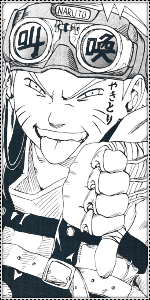
Now, many people believe that as the reincarnation of Rikudo Sennin, Naruto will eventually gain the Rinnegan. This may happen, but in my opinion, that isn't necessary, or even all that important. The Rinnegan is a useful tool, and a powerful one, but ultimately, the Inner Path of peace isn't about having power in the world; it's about transcending power and the world itself. If Kishimoto continues in the same vein he has, expect the ending of Naruto to not be about the 'ultimate evil' being beaten down, but about it being dissolved by a power that is beyond the concept of power; true transcendence. It isn't about jutsu, it isn't about chakra; it will be about a true awakening to become the Transcendent One.
Believe it!